Small business AI adoption jumped from 39% to 55% between 2024 and 2025 — a 41% year-over-year increase — and industry forecasts put adoption above 80% by the end of 2026. That's not a slow curve. That's a shift from "AI is optional" to "AI is the baseline" in about two years.
The businesses winning right now aren't the ones with the biggest budgets. They're the ones that picked one or two high-impact trends, executed well, and didn't try to chase every shiny new tool. This guide breaks down what's actually changing in AI marketing in 2026, which tools are worth your time, and how to start without wasting budget on hype.
If you want the bigger picture first, our complete guide to how AI is transforming digital marketing in 2026 covers SEO, PPC, content, and web development in depth. This piece goes narrower — the specific trends and tools shaping small business marketing budgets this year.
Trend 1: Zero-Click Search Is the New Front Door
What's happening
Search isn't just a Google results page anymore. Customers ask ChatGPT, Perplexity, Gemini, and Google's AI Overviews directly — and often get their answer without ever clicking through to a website. This shift has a name: Answer Engine Optimization (AEO), sometimes called Generative Engine Optimization (GEO).
For small businesses, this changes the goal. Ranking #1 on a search results page still matters, but increasingly the real prize is being the source an AI assistant cites when it answers a customer's question directly.
What to do about it
- Structure content so answers are easy to extract: clear headings, direct answers near the top, FAQ sections
- Keep your business information (name, services, location, pricing) consistent everywhere online — AI systems weight consistency as a trust signal
- Publish content that documents real expertise rather than generic marketing copy — AI models increasingly favor content that "clarifies rather than decorates"
This is exactly the kind of structural work our SEO & Content team builds into every content strategy — not as an afterthought, but from the first outline.
Trend 2: Agentic AI Workflows Replace Single-Task Tools
What's happening
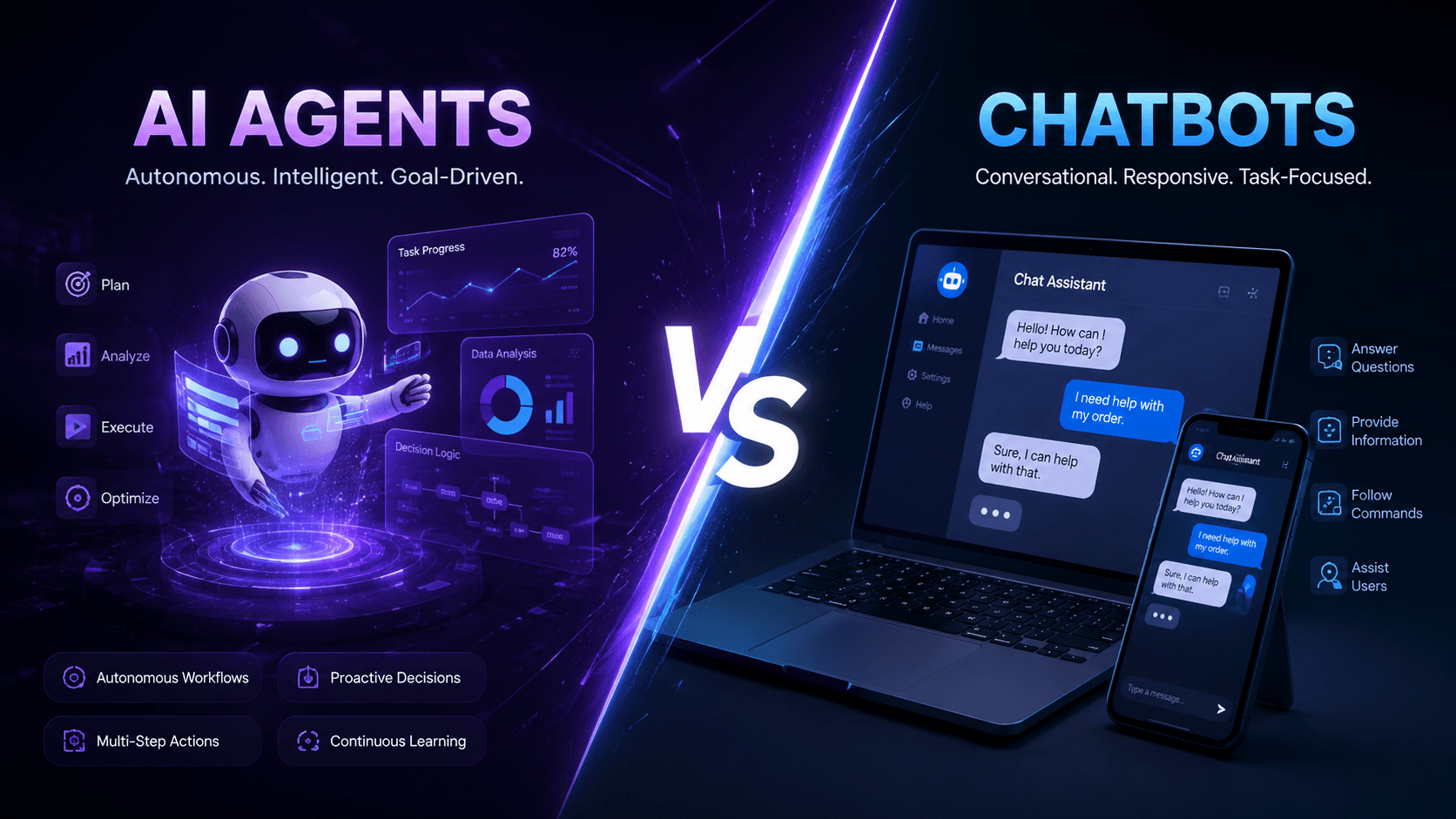
A few years ago, AI marketing tools each did one thing: write an email, generate an image, summarize a report. In 2026, the shift is toward agentic workflows — AI systems that plan and execute multi-step tasks with minimal supervision.
Instead of "if email opens, send follow-up," an agentic system can research a prospect, draft personalized outreach, schedule the send, track the response, and adjust the next step — without a human re-triggering each stage. This is different from a chatbot, which mostly responds to what's typed at it. We broke down that distinction in detail in AI Agents vs. AI Chatbots if you want the full comparison.
The tooling is also consolidating. Rather than switching between five single-purpose apps, AI is increasingly embedded directly inside the CRM or marketing platform a business already uses — meaning it has access to real customer history and campaign data, not just a blank prompt box.
What to do about it
- Don't try to "adopt agentic AI" as a company-wide initiative. Pick one repetitive workflow — lead follow-up is usually the highest-ROI starting point — and pilot it there
- Favor tools that plug into your existing CRM/email platform over standalone AI apps that create another disconnected dashboard
- If you're evaluating whether your business needs a chatbot, an agent, or both, that's precisely the kind of build we scope through our AI Chatbots & Agents service
Trend 3: Hyper-Personalization at Small-Business Prices
What's happening
Dynamic, AI-driven personalization — showing different messaging, pricing, or product recommendations to different customers in real time — used to require an enterprise marketing stack and a data science team. In 2026, tools like Mailchimp AI and HubSpot AI put usable versions of this inside plans small businesses can actually afford.
What to do about it
- Start narrow: personalize one high-traffic landing page or one email sequence before trying to personalize everything
- Use behavior you already have — past purchases, pages visited, email opens — before investing in more complex data collection
- Measure lift before scaling. Personalization sounds sophisticated, but it only earns its keep if conversion actually improves
This is squarely where Analytics & CRO work matters — personalization without measurement is just guessing with extra steps.
Trend 4: AI-Generated Visuals Replace Traditional Photo & Video Production
What's happening
Tools like Canva Magic Studio, PhotoRoom, and next-generation image models can now produce usable product photography, social graphics, and even short video content without booking a shoot. For small businesses that previously skipped visual content because of cost, this closes a real gap.
What to do about it
- Use AI-generated visuals for high-volume, lower-stakes content: social posts, product variations, ad creative testing
- Keep real photography and video for brand-defining moments — hero shots, testimonials, anything where authenticity is the point
- Don't assume "AI-generated" means "free labor" — someone on your team still needs to direct, select, and edit
The AI Marketing Tools Actually Worth Paying For in 2026
Rather than another list of tool names that will be outdated in six months, here's how to think about the categories:
Content & copy — For drafting blog posts, ad copy, and email sequences. The output is a starting point, not a finished asset; the businesses getting the best results still have a human editing pass for brand voice and accuracy.
Visual creation — For scaling social and ad creative without a full production budget. Best used for volume and testing, not brand-defining imagery.
CRM-native AI — For lead scoring, follow-up automation, and reporting. This is where the "agentic workflow" trend from above actually lives day to day.
AI visibility & search monitoring — A newer category tracking whether your business gets cited in AI-generated answers, not just where you rank in traditional search results. Expect this to become standard alongside SEO reporting over the next year or two.
Picking the right combination depends on your bottleneck, not on which tool has the most buzz. That evaluation — what to adopt, what to skip, and how it fits your existing stack — is exactly what our AI & Machine Learning and Generative AI Solutions teams help clients work through.
How to Start Without Wasting Budget
A simple three-step framework:
- Pick one bottleneck. Not "we should use more AI" — a specific, named problem: slow lead follow-up, inconsistent social posting, content that takes too long to produce.
- Pilot one tool for 30–60 days. Resist stacking five tools at once. You won't be able to tell what's actually working.
- Measure before expanding. If the pilot doesn't move a real number — response time, conversion rate, hours saved — don't scale it. Try a different bottleneck instead.
This is also where working with a partner who's already run this process across dozens of businesses saves real time. If you'd rather skip the trial-and-error, our team can put together your AI marketing plan directly — or you can browse our full range of services and pricing to see what a working engagement looks like.
Frequently Asked Questions
Do small businesses actually need AI marketing, or is it hype? Some of it is hype. But the underlying shift — customers using AI assistants to search, and marketing tools embedding AI into everyday workflows — is real and already reshaping where budget goes. The mistake isn't ignoring AI; it's adopting it without a specific problem to solve.
What's the difference between AI marketing tools and AI marketing agencies? Tools handle specific tasks (writing, scheduling, analysis) but still need a human deciding strategy, evaluating output, and connecting the work to business goals. An agency provides that layer on top of the tools — which is why the most effective approach usually combines both, not one or the other.
How much should a small business budget for AI marketing tools in 2026? It varies widely by scope, but AI-augmented approaches are often more cost-effective than traditional methods because AI reduces the manual hours required. See our pricing page for a clear breakdown of what a working engagement costs.
Will AI replace the need for a marketing agency? No — it's changing what agencies do, not eliminating the need for them. AI handles data analysis, first drafts, and repetitive execution; humans still handle strategy, brand judgment, and client relationships. Agencies that combine both are outperforming both AI-only and traditional-only approaches.
What is AEO/GEO and do I need to worry about it? Answer Engine Optimization (or Generative Engine Optimization) is the practice of structuring content so AI assistants like ChatGPT and Google's AI Overviews can find, understand, and cite it directly. If your customers research purchases online — and most do — this is worth paying attention to now rather than in two years when it's the default expectation.
Final Thoughts
AI in 2026 isn't optional, but it's also not one-size-fits-all. Trying to adopt everything at once is how businesses waste budget and end up with a pile of subscriptions nobody uses. The businesses actually winning are picking one or two of the trends above, executing them well, and building from there.
If you want help figuring out which trends matter most for your specific business — and which tools are worth the investment — get in touch with The Vivid Digital for a free consultation, or explore our case studies to see how this plays out in practice.